


Barcelona is one of those cities that feels like three destinations rolled into one. You get beach mornings, mountain-top views, and world-famous art all in the same afternoon. If you’re putting together a Barcelona travel guide for your own trip, you’ve picked a city that rewards a little planning, because prices, tickets, and even the tourist tax have changed a lot in 2026.
This guide walks you through everything a first-time visitor actually needs: when to go, how to get around, what to see, what it costs, and how to avoid the mistakes that eat up a travel budget fast. It’s written in plain language, with real 2026 numbers, so you can use it to build your own day-by-day plan instead of guessing.
Whether you have three days or ten, this Barcelona travel guide covers the practical stuff transport passes, entrance fees, neighborhoods to stay in alongside the fun stuff, like which beach to pick and where to eat the best tapas. Let’s get into it.
When Is the Best Time to Visit Barcelona?
The best months for visiting Barcelona are the shoulder months May, June, September, and October when you’ll avoid the extreme heatwaves that have increasingly plagued the city in recent years. These months also mean smaller crowds at major sights and slightly better hotel rates than peak summer.
- Spring (April–June): Warm days, blooming parks, and comfortable evenings. Great for walking tours.
- Summer (July–August): Hot and crowded. Beaches are packed, and popular sights need advance booking.
- Autumn (September–October): Warm sea, thinner crowds, and lower prices. Many locals call this the sweet spot.
- Winter (November–March): Mild by European standards, fewer tourists, and the cheapest hotel deals but some beach clubs and rooftop bars close for the season.
If your dates are flexible, aim for late May or the last two weeks of September. You’ll get good weather without fighting for a table at every restaurant.
Getting to Barcelona and Around the City
From the Airport to the City Center
Barcelona–El Prat Airport sits about 15 km from the city center, and you have a few solid options to get in:
- Metro (L9 Sud line): Runs directly from both terminals into the city.
- Aerobús: A direct shuttle bus to Plaça Catalunya.
- Train (Rodalies R2): Connects Terminal 2 to Sants Station and Passeig de Gràcia.
- Taxi: The most convenient but priciest option, especially at night.
Here’s what public transport actually costs in 2026:
| Ticket Type | Price (2026) | Best For |
| Single Airport Ticket | €5.90 one-way | One quick trip in or out |
| T-Casual (10 rides, Zone 1) | €13.00 | Short stays without airport transfers |
| Hola Barcelona Travel Card (2 days) | €18.70 | Visitors staying 2+ days, includes airport |
| Hola Barcelona Travel Card (5 days) | €43.60 | Longer stays, unlimited travel |
| T-Usual (30-day unlimited, Zone 1) | €22.80 | Long stays or digital nomads |
A useful tip most guides miss: standard single tickets and 10-journey T-Casual passes aren’t valid for travel between the airport and the city center you need either the special Airport Ticket or a Hola Barcelona Travel Card, which also covers the airport metro line.
Getting Around the City
Barcelona’s metro system is fast, clean, and covers almost every major attraction. A few practical notes:
- The L3 (green) and L5 (blue) lines cover most tourist routes, including Sagrada Família, Park Güell, and Barceloneta.
- One tap on your card covers transfers within 75 minutes of your first validation.
- Walking is often just as fast for short hops in the Gothic Quarter, since it’s a dense old-town maze.
- Bicing (the city bike-share) needs a resident registration, so short-term visitors should use rental bike shops instead.
Where to Stay in Barcelona
Picking the right neighborhood matters as much as picking the right hotel. Here’s a quick breakdown:
| Neighborhood | Vibe | Best For |
| Eixample | Elegant, wide avenues, close to Sagrada Família | First-timers, families |
| Gothic Quarter (Barri Gòtic) | Medieval streets, historic charm | Culture lovers, couples |
| El Born | Trendy, artsy, great food scene | Foodies, younger travelers |
| Barceloneta | Beachfront, lively | Beach lovers, short stays |
| Gràcia | Local, quiet, bohemian | Repeat visitors, longer stays |
If it’s your first trip, Eixample or the Gothic Quarter give you the best mix of walkability and access to major sights.
A Quick Word on the Barcelona Tourist Tax
This is one thing that’s changed significantly and trips up a lot of first-time visitors. Barcelona’s tourist tax doubled on 1 April 2026, reaching a maximum of €12.00 per person, per night for five-star hotel guests. The tax works as two layers a regional Catalan rate plus a €5.00 Barcelona city surcharge making it more expensive than the rest of Catalonia.
Here’s what it looks like by accommodation type:
| Accommodation Type | Regional Tax | City Surcharge | Total per Night |
| Tourist apartment | €4.50 | €5.00 | €9.50 |
| 3-star hotel | ~€1.00 | €5.00 | ~€6.00 |
| 5-star / luxury hotel | €7.00 | €5.00 | €12.00 |
A few things worth knowing:
- Every guest aged 16 and over pays it, and children under 16 are fully exempt.
- The tax is capped at a maximum taxable stay of 7 nights after that, you stop paying it even if you stay longer.
- The surcharge is set to keep climbing, reaching €6 in 2027, €7 in 2028, and €8 in 2029.
- It’s charged per person, per night, and usually added at check-in or check-out it’s rarely included in the room rate shown online.
Budget an extra €7–€15 per person, per night on top of your accommodation cost, depending on where you stay.
Top Things to Do in Barcelona
1. Sagrada Família
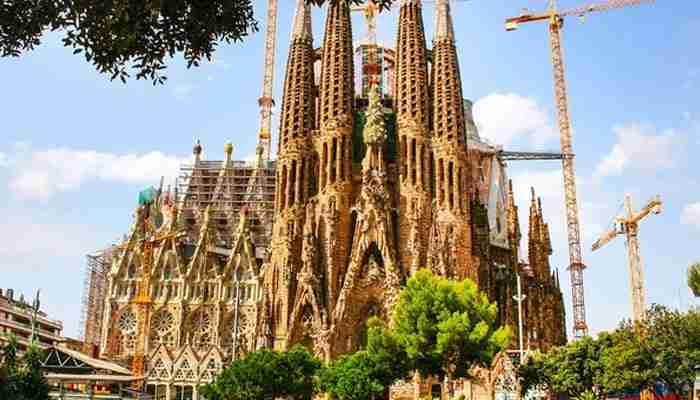
No Barcelona travel guide is complete without Gaudí’s unfinished masterpiece except in 2026, it’s actually finished. 2026 marks the centenary of Antoni Gaudí’s death, and the basilica now standing at 172.5 metres is officially complete and the tallest church in the world. That makes this year a genuinely special time to visit.
Practical tips:
- Buy tickets online only there are no physical ticket offices on-site, and due to enormous demand in 2026, slots sell out up to two months in advance.
- Basic entry runs around €26, tower access around €36, and a guided tour around €40.
- You can choose between the older Nativity Façade for city views or the newer Passion Façade for sea views a lift takes you up, but you walk down via narrow spiral stairs.
- Plan for roughly 1.5 to 2 hours to comfortably see the interior, your chosen tower, and the underground museum.
2. Park Güell
Another Gaudí gem, this colorful park overlooks the whole city. The monumental zone requires a timed ticket, but most of the park is free to wander. Go early morning for the best light and thinnest crowds.
3. The Gothic Quarter (Barri Gòtic)
Wander narrow medieval alleys, visit Barcelona Cathedral, and stumble on hidden plazas. This is the best neighborhood for aimless walking put your map away for an hour and just explore.
4. La Rambla and La Boqueria Market
La Rambla is Barcelona’s famous pedestrian boulevard. Halfway down, duck into La Boqueria Market for fresh juice, jamón, and seafood tapas. Keep an eye on your bag here it’s touristy and pickpocket-prone.
5. Barceloneta Beach
Barcelona’s most central beach, right by the marina. It gets crowded in summer, but it’s an easy walk from the old town and perfect for an afternoon swim.
6. Cast Batlló and Cast Milà (La Pedrera)
Two more Gaudí buildings, both on Passeig de Gràcia. Their wavy facades and rooftop details make them favorites for photos and both offer excellent audio-guided tours.
7. Camp Nou
For football fans, the FC Barcelona stadium tour is worth the trip, especially with ongoing stadium renovations changing the experience year to year. Check current tour availability before you go, since parts may be under construction.
8. Montjuïc Hill
Take the cable car up for panoramic views, then explore the Montjuïc Castle, the Magic Fountain, and the Joan Miró Foundation all in one hillside visit.
Where and What to Eat in Barcelona
Barcelona’s food scene goes well beyond paella. Here’s what to try:
- Tapas: Small plates meant for sharing; try patatas bravas, pan con tomate, and jamón ibérico.
- Pintxos: Basque-style bites often found in El Born and Gràcia.
- Fideuà: A noodle-based cousin of paella, usually made with seafood.
- Crema catalana: Catalonia’s answer to crème brûlée.
- Vermut: A pre-lunch tradition; join locals for vermouth and olives around midday on weekends.
For an affordable but authentic experience, skip restaurants directly on La Rambla (overpriced and touristy) and head one or two streets back instead.
Sample 3-Day Barcelona Itinerary
Day 1: Gaudí and the Old Town
Morning: Sagrada Família
Afternoon: Passeig de Gràcia, Cast Batlló, Cast Milà
Evening: Dinner and a walk through the Gothic Quarter
Day 2: Parks and the Beach
- Morning: Park Güell
- Afternoon: Barceloneta Beach
- Evening: Sunset at Montjuïc, dinner in El Born
Day 3: Markets and Culture
- Morning: La Boqueria Market and La Rambla
- Afternoon: Picasso Museum or Joan Miró Foundation
- Evening: Vermut tasting and a flamenco or live music show
Budgeting for Your Trip
Per person, excluding flights, budget roughly €200 to €300 for a careful trip and €300 to €400 for a mid-range trip, per day for two people traveling together plus the tourist tax on each night of your stay. Barcelona is mid-priced for a major European city: cheaper than Paris or London, but pricier than much of inland Spain.
| Accommodation Type | Regional Tax | City Surcharge | Total per Night |
| Tourist apartment | €4.50 | €5.00 | €9.50 |
| 3-star hotel | ~€1.00 | €5.00 | ~€6.00 |
| 5-star / luxury hotel | €7.00 | €5.00 | €12.00 |
Safety and Practical Tips
- Pickpocketing is the biggest risk, especially on La Rambla, the metro, and in crowded markets. Use a crossbody bag and keep valuables zipped away.
- Dress code matters at religious sites shoulders should be covered when visiting the Sagrada Família, since it’s a consecrated church.l
- Short-term rentals are being restricted citywide, so double-check that any apartment listing is licensed before booking.
- Tap water is safe to drink throughout the city.
- Tipping isn’t mandatory rounding up or leaving 5–10% for good service is enough.
Final Thoughts
Barcelona is a city that works for almost any kind of traveler, whether you’re chasing Gaudí’s architecture, lounging on Barceloneta Beach, or eating your way through El Born one tapas plate at a time. What makes it special isn’t just the sights it’s how easily they all fit together in one walkable, sunny city. A single day can take you from a Gothic cathedral to a Mediterranean beach without ever needing a car.
That said, 2026 is a slightly different year to visit than the one before it. The Sagrada Família is finally complete for Gaudí’s centenary, ticket demand is higher than usual, and the tourist tax has roughly doubled since April. None of this makes Barcelona harder to enjoy it just means a little upfront planning goes a long way. Booking your Sagrada Família slot early, choosing the right transport pass, and budgeting for the updated nightly tax will save you both money and stress once you land.
Use this Barcelona travel guide as your starting checklist rather than a strict itinerary. Pick the neighborhoods and sights that match your pace, leave room to wander through the old town without a map, and let the city’s food, art, and coastline do the rest. However many days you have, Barcelona has a way of making them feel like more.
Barcelona travel guide FAQs
1. Is 3 days enough for a Barcelona trip?
Three days is enough to see the main highlights Sagrada Família, Park Güell, the Gothic Quarter, and the beach but 4–5 days lets you slow down and add day trips.
2. Do I need to pay a tourist tax in Barcelona?
Yes. As of April 2026, every guest 16 or older pays between roughly €6 and €12 per person, per night, depending on accommodation type, capped at seven nights.
3. What’s the cheapest way to get from the airport to the city?
The Hola Barcelona Travel Card is usually the best value if you’re staying more than a day, since it covers the airport metro line plus unlimited city transport.
4. Is Barcelona safe for tourists?
Yes, overall violent crime is rare. Petty theft in tourist-heavy areas is the main concern, so stay alert in crowds.
5. What language do people speak in Barcelona?
Both Catalan and Spanish are official languages. Most people in tourism-facing jobs also speak English.
