


You can learn everything about a place by how it treats lunch. On Hvar, lunch is not a pause in the day; it is the day, a two-to-three-hour institution conducted on stone terraces and boat-access beaches, and the rest of the schedule simply arranges itself around it. Dinner is taken seriously too, but lunch is where the island shows its philosophy: nothing worth eating should be hurried, and nothing worth hurrying is worth eating.
The island has the raw materials to back up the attitude. With some 2,700 hours of sunshine a year, Hvar is officially the sunniest spot on the Croatian coast, and all that light goes somewhere: into the grapes on the southern slopes, the olives on the terraced hillsides, the lavender and rosemary that perfume the interior, and the tomatoes of the Stari Grad Plain, a patchwork of fields first laid out by Greek colonists 2,400 years ago and still farmed along the same stone-walled lines. UNESCO protects the plain as a cultural landscape; the islanders protect it by continuing to grow lunch on it. For eaters, this island an hour off the Croatian coast might be the best-kept secret in the Mediterranean.
Start with the konoba
The konoba is the island’s fundamental unit of eating: a family-run tavern, often a converted wine cellar or fisherman’s storehouse, where the menu is short because it depends on what the boat and the garden did that morning. The best ones barely bother with a menu at all. Someone’s mother is in the kitchen, someone’s cousin caught the fish, and the wine arrives in a carafe from a barrel you can usually see from your chair. Order whatever fish they name, grilled over wood and dressed with nothing but island olive oil, a squeeze of lemon and a scatter of blitva, the garlicky Swiss chard and potato side dish that accompanies practically everything here, and you’ll understand why the fancier restaurants of the harbor towns spend so much effort imitating this simplicity.
A first-night konoba dinner also doubles as reconnaissance. This is where you ask what to eat tomorrow, which cove has the best grill, whose grandmother still makes the pastries, and where to find the peka worth ordering. On an island where the food culture runs on family networks rather than review sites, a talkative konoba owner is worth more than any guidebook.
The dish that requires planning
That dish is peka. Lamb, veal or octopus goes into a shallow iron pan with potatoes, onions, herbs and oil, covered with a bell-shaped lid, buried in embers on an open hearth and left alone for hours while the meat collapses and the potatoes at the edge of the pan turn amber in the drippings. You order it a day ahead, always; the embers cannot be rushed and no serious kitchen will pretend otherwise. It arrives at the table still under its dome, is unveiled with some ceremony, and tastes like the entire concept of slow cooking finally explained. Book it for your second night, so you can spend the first night finding your konoba. The octopus version is the connoisseur’s pick: hours under the lid turn a famously stubborn creature into something you can cut with the side of a fork.
Two more plates deserve chasing. Gregada is the fishermen’s stew, and the islanders will tell you, with some feeling, that it is Hvar’s true signature: white fish layered with potatoes and onions, doused in white wine and olive oil, simmered with enough garlic to matter and finished with parsley, then mopped up with bread until the pot is embarrassingly clean. It was invented on boats by men cooking the fish they couldn’t sell, which is the origin story of most great Mediterranean dishes. And in Hvar Town’s back streets, look for the old-fashioned sweets that trace back to the island’s four Venetian centuries: rafioli and cvite, delicate pastries scented with citrus and brandy, and anything made with carob, the chocolate-adjacent pod the islanders milled into flour when chocolate was for Venetians. None of it photographs particularly well, which on this island is usually the sign you’ve ordered correctly.
Drink the island
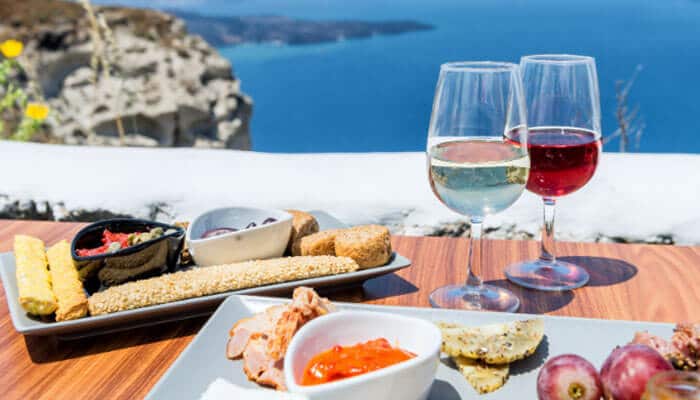
Hvar drinks its own geography. On the vertiginous southern slopes around Sveta Nedjelja and Ivan Dolac, Plavac Mali vines grow on terraces so steep the harvest is a mild act of mountaineering, conducted by hand because no machine can stand on the hillside. The grape, a descendant of Zinfandel’s ancestor, ripens twice here, once from the sun above and once from the light bouncing off the sea below, and the result is dense, dark, sun-loaded red wine that is the pride of the Croatian coast and pairs with peka the way it was clearly always meant to.
The island whites are rarer and stranger. Bogdanuša, whose name translates roughly as ‘God-given,’ grows almost nowhere else on earth; it is crisp, faintly herbal, low in drama and high in refreshment, historically drunk on religious holidays and currently the correct answer at noon. Look too for Prč, an aromatic local oddity rescued from near-extinction by a handful of stubborn growers. Several family wineries around Jelsa, Svirče and Vrisnik run tastings in their cellars, usually conducted by the winemaker personally and priced as if nobody has told them what Napa charges. The drive over the hills, or the boat ride along the southern coast, is half the tasting. Finish any of these evenings with a glass of prošek, the amber dessert wine made from sun-dried grapes, or a shot of travarica, the herb-infused grape brandy that functions as the island’s all-purpose digestif, greeting and medical system.
The market and the pantry
Cooking for yourself on Hvar is not a compromise; it’s a second restaurant. Morning markets in Hvar Town and Stari Grad sell tomatoes with actual flavor, sheep’s cheese from the neighboring islands, wild asparagus in spring, honey that tastes of the lavender fields it came from, capers picked from the stone walls they grow out of, figs in late summer and olive oil good enough to bring home in worrying quantities. Come early, before the day-trippers, and shop the way the locals do: by asking the seller what to buy, then buying exactly that. The vendors weigh things approximately and round prices in your favor often enough that arguing feels ungrateful.
This is where staying in a house instead of a hotel pays its dividend, and the island makes it easy: many Hvar villas come with proper outdoor kitchens, wood-fired grills and terraces built around the long table, which is to say, built around the way the island actually eats. Buy the fish in the morning, swim through the afternoon, grill as the sun drops behind the Pakleni Islands, and you have replicated the local weekend with suspicious accuracy.
Lunch goes to sea
The island’s signature meal might be the one you need a boat for. The Pakleni Islands, the pine-covered chain scattered off Hvar Town’s harbor, hide a circuit of beach restaurants where a water taxi drops you at a cove, lunch stretches past the third hour, and the swim back to the table counts as the intermission. Some are barefoot shacks grilling the morning’s catch over driftwood-adjacent fires; at least one, on Palmižana, hides a botanical garden and a serious wine list behind its beach. Grilled fish, chilled Bogdanuša, salt drying on your shoulders, no schedule: it’s the Mediterranean lunch fantasy, still operating at Croatian prices.
The formula repeats around the island’s own coves for anyone who’d rather skip the boat. Follow any dirt road on the southern coast toward the smell of woodsmoke and you will generally be rewarded: a terrace under pines, a short menu recited rather than printed, and a proprietor who seems mildly surprised, in the most hospitable way, that you found the place at all.
Finish inland
End the food tour in the interior, which most visitors never see and which is where the island keeps its pantry. The half-abandoned stone hamlets of the highlands, places like Humac and Velo Grablje, once lived on lavender and wine and now host some of Hvar’s most atmospheric eating: hearth-cooked meals in villages without electricity, roadside stands selling honey, dried herbs and olive oil from the family grove. Velo Grablje was once one of Europe’s great lavender producers and still throws a festival for the June harvest, when the hills turn purple and the whole island smells faintly of a well-kept linen cupboard.
Better yet, time your visit for autumn, when the grape harvest in September and the olive harvest in late October turn the whole island into a working kitchen and every family with a grove suddenly needs an extra pair of hands. Visitors who volunteer are traditionally paid in lunch, which on Hvar is the strong currency. Otherwise, go in June or September: the sea is warm, the konobas have time to talk, the markets are at full strength and the crowds of high summer are either not yet arrived or gratefully departed. Come hungry, book the peka on day one, eat it on day two, and accept now that your olive oil standards are about to be permanently damaged. There are worse souvenirs than ruined expectations.