



Planning a trip to South Africa and asking yourself, Is Johannesburg safe? You are not alone. It’s one of the most searched travel questions about the city, and the honest answer is not a simple yes or no. Johannesburg is a big, exciting, and diverse city. It has world-class restaurants, powerful history museums, and some of the friendliest people you’ll meet on your travels. But it also has real safety challenges that you should understand before you land.
Johannesburg can be safe if you know where to go, how to get around, and what to avoid. Most visitors who stick to well-known areas like Sandton, Rosebank, and Melrose Arch, and who use trusted transport like Uber or a private driver, have smooth and enjoyable trips. The risk goes up quickly if you wander into the wrong neighborhood, walk around at night, or let your guard down in crowded public spots.
In this guide, we’ll break down exactly what makes Johannesburg risky, which areas are safe, what the current 2026 crime data actually shows, and the practical steps that keep tourists safe every single day. By the end, you’ll have a clear, realistic picture not internet scare stories, not sugarcoated marketing so you can decide for yourself and travel with confidence.
Why People Worry About Johannesburg’s Safety
To really answer is Johannesburg safe, it helps to understand why the city has a reputation for crime in the first place. Johannesburg’s safety situation is closely tied to South Africa’s history. Decades of apartheid left huge gaps between rich and poor, and those gaps never fully closed. Some neighborhoods became extremely wealthy and secure, while others were left with very little investment or opportunity. That inequality is still the root cause of most crime in the city today.
This isn’t unique to Johannesburg. Many big cities around the world, think of parts of Baltimore, Rio de Janeiro, or even Mexico City, have similar patterns. Crime is heavily concentrated in specific areas, while other neighborhoods just a few kilometers away feel completely normal. Understanding this pattern is the key to staying safe in Joburg: It’s not about avoiding the whole city, it’s about knowing which streets to avoid.
Johannesburg Crime Statistics: What the 2026 Data Shows
South Africa’s police service (SAPS) releases crime data every quarter, and the numbers help paint an honest picture. Here’s what the most recent 2025–2026 reporting period shows:
- Johannesburg’s homicide rate sits around 26 per 100,000 residents, which is high compared to most major world cities.
- Carjacking is the single biggest risk tourists should know about, especially at traffic lights and on-ramps.
- Robbery and armed robbery rates are higher than most G7 capital cities.
- Crime is not spread evenly. Inner-city areas like Hillbrow, Berea, and Alexandra report far more incidents than wealthy suburbs like Sandton or Rosebank.
- Some neighborhoods are actually improving. Areas such as Mondeor, Rosebank, and Moroka saw double-digit decreases in reported crime year-on-year, while a handful of areas like Alexandra and Lenasia saw increases.
The takeaway? Johannesburg’s crime problem is real, but it’s also very geographic. This is why almost every safety guide gives the same advice: Stay in the tourist-friendly bubble, and the odds shift heavily in your favor.
The Safest Areas in Johannesburg for Tourists
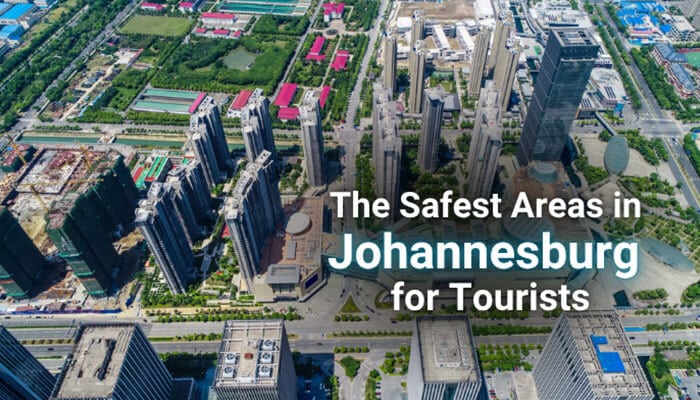
If you’re wondering where to stay to feel safest, these neighborhoods are consistently recommended by travel experts, tour operators, and residents alike:
| Neighborhood | Why It’s Safe | Best For |
| Sandton | Africa’s wealthiest business district, heavy private security, well-lit streets | Hotels, shopping, business travel |
| Rosebank | Gentrified, walkable by day, weekend markets | Cafes, art, casual sightseeing |
| Melrose Arch | Fully gated, mixed-use development | First-time visitors, families |
| Hyde Park | Low density, strong private security | Quiet stays, upscale dining |
| Houghton | Boomed-off streets, active community security | Residential comfort |
| Maboneng Precinct | Regenerated arts district | Daytime culture, galleries (use Uber at night) |
These neighborhoods share three things in common: Private security, good lighting, and easy access to Uber. That combination is what makes Johannesburg genuinely manageable for visitors.
Areas to Avoid in Johannesburg
Just as important as knowing where to go is knowing where not to go. Tourists are strongly advised to avoid the following areas, especially after dark:
- Johannesburg CBD (downtown): High rates of muggings and street crime
- Hillbrow: One of the most dangerous inner-city neighborhoods in South Africa
- Berea: Bordered by Hillbrow, similar risk profile
- Alexandra township: High crime, only visit with an organized, guided tour
- Yeoville: Declining safety, best avoided on foot
- Isolated parks or streets after dark: Even in otherwise decent areas
If you want to see Soweto, Alexandra, or the older parts of the inner city, do it with a licensed local guide or an organized tour company. This is genuinely one of the best ways to experience Johannesburg’s history safely, since guides know exactly which streets are fine and which aren’t.
Is Johannesburg Safe for Solo Travelers?
Yes, solo travel in Johannesburg is possible, and many people do it successfully every year. That said, it takes a bit more planning than, say, backpacking through Southeast Asia. Here’s how solo travelers stay safe:
- Book accommodation in Sandton, Rosebank, or Melrose Arch
- Use Uber or Bolt for every trip instead of walking between areas
- Join small-group tours for Soweto, Constitution Hill, and the Apartheid Museum
- Avoid displaying expensive jewelry, cameras, or phones in public
- Let someone know your daily plans, especially if you’re traveling alone
If it’s your very first solo international trip, some travel experts suggest starting somewhere lower-risk and building up to a city like Johannesburg. But if you’ve traveled solo before and you follow these basics, you should be fine.
Is Johannesburg Safe for Women?
Female travelers can and do visit Johannesburg safely, but South Africa does have high rates of gender-based violence, so extra caution matters here more than in many other destinations. Recommended steps include:
- Avoid walking alone, especially at night; always use Uber door-to-door
- Stick to well-reviewed hotels in Sandton or Rosebank
- Join group tours rather than exploring unfamiliar areas solo
- Keep your phone charged and share your live location with someone you trust
- Trust your instincts if a situation feels off; leave immediately
Many solo female travelers report positive experiences in Joburg specifically because they followed this “safe bubble” approach rather than winging it.
Is Johannesburg Safe at Night?
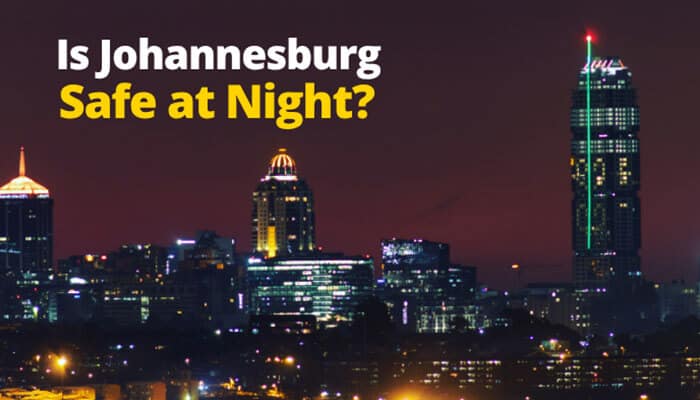
This is where the answer really depends on location. Inside Sandton, Melrose Arch, or around Rosebank’s mall areas, nightlife feels normal and safe, similar to any major city. Restaurants, bars, and rooftop venues are busy and well-secured.
Outside of these zones, the picture changes fast. The Johannesburg CBD, Hillbrow, and Berea are considered unsafe after dark, even for locals. The golden rule for nighttime safety in Johannesburg is simple:
- Never walk between neighborhoods at night; always take a car
- Book Uber/Bolt rides door-to-door, not just to a nearby corner
- Avoid isolated streets, parking lots, and parks after sunset
- Stick to venues inside gated complexes like Melrose Arch or Sandton City
Getting Around Safely: Transport Tips
Transport is where a lot of Johannesburg’s risk comes from, particularly carjacking at traffic lights. Here’s how to move around the city safely:
- Use the Gautrain, a modern, secure train system that connects the airport, Sandton, and Rosebank. It’s widely considered the safest way to travel in the city.
- Use Uber or Bolt for point-to-point trips instead of public minibus taxis, which are not recommended for tourists.
- Avoid renting a self-drive car unless you’re experienced with local driving conditions. Keep doors locked and windows up at intersections if you do drive.
- Skip city-run metro buses as a tourist; they’re not designed with visitor safety in mind.
- Book a private driver or transfer service for airport pickups and day trips; many hotels can arrange this for you.
Common Scams to Watch Out For
Beyond serious crime, petty scams are the more likely thing you’ll encounter as a tourist. Being aware of these ahead of time takes away most of their power:
- Fake police officers who ask to see your ID or demand a “fine” on the spot always ask for identification and offer to go to the nearest station instead
- Taxi overcharging, especially near Park Station and other transport hubs use metered apps like Uber instead
- Distraction theft in busy markets or malls: Keep bags zipped and in front of you
- ATM skimming: Use ATMs inside banks or malls rather than street-side machines
Practical Safety Tips for Visiting Johannesburg
Here’s a simple checklist you can use before and during your trip:
- Book accommodation in Sandton, Rosebank, or Melrose Arch
- Use Uber, Bolt, or the Gautrain instead of walking or public taxis
- Keep valuables out of sight; no flashy jewelry or exposed phones
- Book guided tours for Soweto, Alexandra, and the inner-city precincts
- Save South Africa’s emergency numbers before you arrive
- Avoid walking anywhere after dark, even in “safe” areas
- Get travel insurance that covers theft and medical emergencies
- Trust your gut if something feels wrong; remove yourself from the situation
Emergency Numbers in Johannesburg
Keep these saved on your phone before you travel:
| Service | Number |
| Police (SAPS) | 10111 |
| Emergency from mobile | 112 |
| Ambulance | 10177 |
| Tourist Police / Tourism Safety | Available at major attractions and hotels |
Final Verdict: Is Johannesburg Safe?
So, is Johannesburg safe? The most honest answer is this: Johannesburg is safe for travelers who plan ahead, stay in secure neighborhoods, and use trusted transport. It is not the kind of city where you can wander freely without a plan, but it’s also not the danger zone that some headlines make it out to be.
Millions of tourists visit Johannesburg every year to see the Apartheid Museum, explore Soweto, enjoy world-class restaurants, and use the city as a gateway to Kruger National Park. The vast majority go home with great memories and zero incidents, simply because they followed the same basic rules covered in this guide: stay in the safe bubble, use Uber or the Gautrain, avoid walking at night, and book guided tours for higher-risk areas.
Travel smart, stay aware, and Johannesburg has a lot to offer.
Is Johannesburg safe FAQs
1. Is Johannesburg safe for tourists in 2026?
Yes, as long as you stay in well-known, secure neighborhoods like Sandton and Rosebank, and avoid walking around alone at night or wandering into unfamiliar inner-city areas.
2. Is it safe to walk around Johannesburg?
It’s safe to walk during the day in areas like Sandton, Rosebank, and Melrose Arch. Walking is not recommended after dark, and it’s best avoided entirely in the CBD, Hillbrow, and Berea at any time.
3. Do I need a private driver in Johannesburg?
It’s not required, but highly recommended for airport transfers, day trips, and evening outings. Uber and Bolt are also reliable and affordable options.
4. Is Soweto safe to visit?
Yes, Soweto is one of Johannesburg’s most fascinating cultural destinations, and it’s generally safe when visited with a licensed tour guide. Independent exploration without local knowledge is not recommended.
5. Is Johannesburg safer than Cape Town?
Crime statistics vary by category. Cape Town actually has a higher murder rate in some reporting periods, while Johannesburg sees more carjacking and robbery. Both cities use the same “know your neighborhood” safety approach.
