

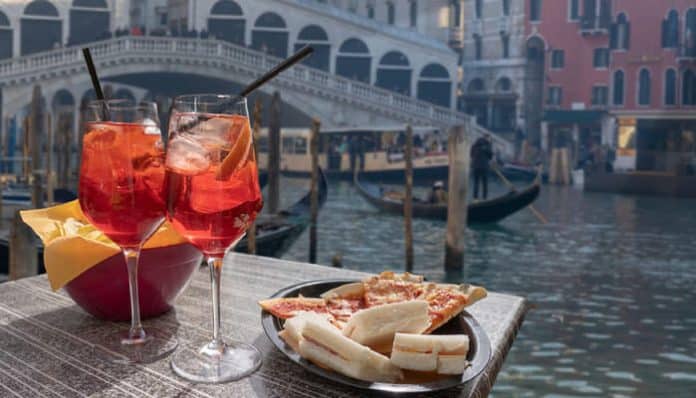

The beautiful city of Venice, Italy, does aperitivo in motion: you stop at a bacaro, order a small glass and one or two cicchetti, then walk on to the next counter. The food may be simple, yet the ritual shows the city at its most social.
How to do aperitivo the Venetian way
First, a little bit of local vocabulary: a bacaro is a small wine bar; cicchetti are the bites set out by the counter (for example, baccalà mantecato on bread, sarde in saor, polpette, fried fish, cheese, cured meat, or seasonal vegetables. Pair them with an ombra, the local name for a small glass of wine, or a spritz made with Select, Campari, or Cynar.
Go around lunch or from late afternoon into early evening. Order at the bar, eat standing, and move after a drink and a few bites. Ask what came out last; a busy tray gives a better clue than a long menu. Walk a few streets from St. Mark’s Square and the station routes. Look for short chalkboards, steady local trade and food prepared in small batches.
Start with two bites and one drink: a good order could include baccalà, one fried item and an ombra of local white. Then you can cross a bridge and try another bar. This pace keeps each stop fresh, lets you compare kitchens and turns a meal into a walk through the city on foot.
Cannaregio: canal-side energy and strong wine lists
Cannaregio makes an easy first stop because its bars spread along quiet lanes and the Fondamenta degli Ormesini. Al Timon draws a lively crowd beside the canal and works well for an evening spritz. Vino Vero is the better pick for natural wine and sharper, more modern cicchetti.
For an older Venetian feel, Ca’ d’Oro alla Vedova is known for its crisp meatballs. Cantina Aziende Agricole feels more like a neighborhood bar; order an ombra and sarde in saor with polenta. My view: Cannaregio gives first-time visitors the best balance of atmosphere, choice and local rhythm.
Rialto and San Polo: the classic bacaro circuit
Rialto has the city’s best-known cluster, so timing matters. All’Arco serves neat, market-led cicchetti from a tiny counter. Cantina Do Mori brings history, dark wood and its small francobollo sandwiches. Arrive before the lunch rush and keep the stop brief.
Al Mercà is a useful niche choice: a tiny counter near the market where people drink in the campo. It suits a quick spritz and a small panino. The area rewards a crawl, since San Polo has one of Venice’s densest groups of bacari.
Dorsoduro: canals, students and excellent cicchetti
Dorsoduro feels slower once the museum crowds thin. Cantine del Vino già Schiavi, also called Al Bottegon, is the essential stop. Its long counter carries fresh cicchetti and a deep wine choice. Try baccalà, tuna, anchovy or a vegetable topping.
Across the canal, Osteria al Squero faces a gondola boatyard and serves bites made for eating on the wall outside. For a quieter glass, head towards Cantina Arnaldi, a small wine bar with crostini, meatballs and sandwiches. Schiavi wins for range; Al Squero wins for the setting.
Castello: a more local evening
Castello stretches far beyond the busy lanes near San Marco. Bacaro Risorto in Campo San Provolo offers an easy entry point, with cicchetti on display and staff used to guiding visitors. Walk east towards Via Garibaldi for a calmer scene.
Alla Rampa is the niche stop. Regulars come for a plain, direct bacaro experience, far from the grand hotel bars. Order what looks freshest and take the cue from the room. Castello suits travelers who enjoy wandering and have time to let the evening unfold.
How to spot tourist traps
Aperitivo works best when turnover is high, and the choice stays focused. Dry bread, huge photo menus and staff pulling people from the lane signal a weak stop. A good bacaro shows its food at the bar, names a few wines, serves quickly and fills with people having one glass before moving on.
Prices rise beside major sights, though cheap alone proves little. Fresh food, clear prices and a short queue matter more. Carry some cash for tiny orders, and treat each bacaro as one part of the route.
Other cities across Italy to consider for an aperitivo tour
Continue the aperitivo tour across Italy, a sensory journey that blends the art of casual drinking with the country’s deep rooted passion for socializing.
Milan turns aperitivo into a fuller spread, Florence leans on Tuscan wine and crostini, while Rome mixes wine bars, salumi and evening drinks across districts such as Trastevere, Monti and Pigneto. For a longer Italy trip, Rome is also a good alternative and easily reachable from Venice; direct high-speed services can make the trip in about three and a half hours.
Venice still offers the most enjoyable version. Keep the route short, order with curiosity, and leave room for one more cicchetto around the next corner.