


In the restaurant industry, food often gets all the attention, but well-designed furniture is what quietly shapes how long guests stay, how comfortable they feel, and how they remember the experience. A well-designed chair can turn a quick meal into a relaxed evening, while an uncomfortable one can cut a visit short, no matter how good the menu is.
For restaurant owners, seating is not just a design choice. It is part of the customer experience.
Seating Sets the Tone Before the First Bite
The moment a guest sits down, they begin forming an impression of the space. Even before the food arrives, the chair they’re sitting in influences their mood and comfort level.
A stable, well-cushioned chair with proper back support instantly signals care and quality. On the other hand, chairs that wobble, feel too hard, or lack proper support can create subtle discomfort that builds over time.
Guests may not always say it out loud, but seating often determines whether they stay for dessert, order another drink, or decide to leave early.
Comfort Encourages Longer Stays and Higher Spending
Comfortable seating does more than improve satisfaction—it directly impacts business performance. When guests feel physically at ease, they naturally stay longer. And longer stays often lead to additional orders, whether it’s appetizers, desserts, or extra beverages.
In contrast, uncomfortable seating can unintentionally encourage faster turnover, even in fine dining spaces where longer stays are usually desirable.
The key is simple: when people are comfortable, they don’t rush their experience.
The Balance Between Style and Ergonomics
Many restaurants prioritize aesthetics when choosing furniture, which makes sense—design plays a major role in branding. However, visually appealing chairs that lack ergonomic support can backfire.
The most successful dining spaces find a balance between design and comfort. Chairs should match the restaurant’s identity while still supporting the natural posture of guests. This includes:
- Proper seat depth so guests don’t feel cramped
- Supportive backrests that encourage relaxed posture
- Cushioning that is soft enough for comfort but firm enough for support
- Armrests were appropriate for longer dining experiences
Even subtle improvements in ergonomics can dramatically change how guests experience a meal.
Different Seating for Different Dining Experiences
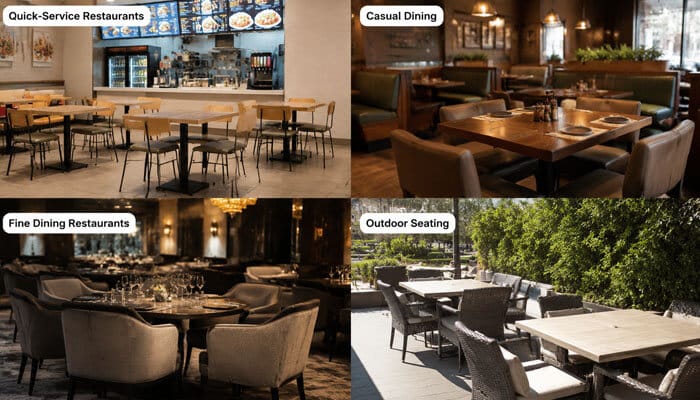
Not all seating needs to be the same. In fact, variety can enhance comfort across different customer types and dining occasions.
For example:
- Quick-service restaurants may prioritize compact but still supportive seating
- Casual dining spaces benefit from cushioned chairs that encourage moderate stay time
- Fine dining restaurants often require deeper, more luxurious seating for extended meals
- Outdoor seating should balance durability with comfort, especially for longer summer evenings
Matching seating style to customer behavior helps create a more intentional and enjoyable experience.
Materials Matter More Than People Realize
The feel of a chair goes beyond its shape. Materials play a major role in comfort.
Hard plastic or untreated wood may work for short dining experiences, but they often become uncomfortable during longer stays. Upholstered seating, padded cushions, and breathable fabrics can significantly improve the guest experience.
At the same time, durability is essential. Restaurant seating must handle constant use while still maintaining comfort over time, which is why many owners invest in commercial-grade ergonomic designs.
Small Seating Details That Make a Big Difference
Sometimes it’s not the chair itself, but the details around it that affect comfort:
- Proper table height relative to seating
- Enough legroom for relaxed positioning
- Stable flooring that prevents wobbling
- Consistent seat spacing so guests don’t feel crowded
Even high-quality chairs can feel uncomfortable if they are poorly paired with tables or arranged too tightly.
Why Seating Comfort Builds Customer Loyalty
Guests may not consciously analyze seating, but they remember how they felt during the meal. If they were constantly adjusting, shifting, or feeling uncomfortable, the experience becomes less enjoyable—even if the food was excellent.
On the other hand, when seating allows guests to relax fully, they are more likely to associate the restaurant with comfort, care, and quality. This emotional connection is what brings customers back.
Final Thoughts
Comfortable seating is one of the most underrated tools in restaurant success. It influences how long guests stay, how much they order, and how they remember the experience long after they leave.
By investing in thoughtful seating design—balancing comfort, durability, and style—restaurant owners can significantly elevate the overall dining experience without changing the menu or the space.
In many ways, great hospitality begins with a great seat.