

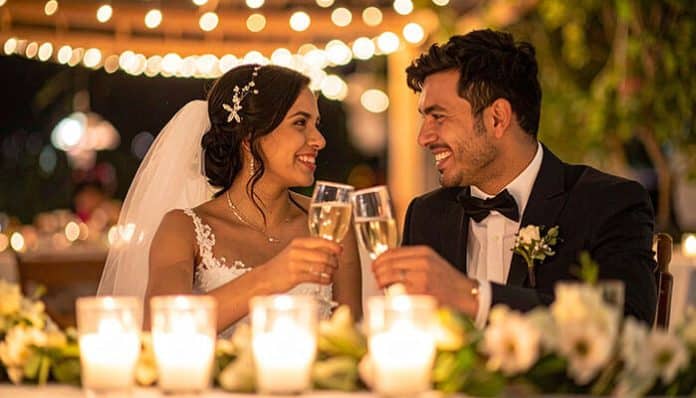

There are a lot of big choices that come with planning a wedding. The venue. The dress or suit. The guest list. The music. The flowers. The food.
And then, somewhere in the middle of all that, someone asks, “What wine are we serving?”
It can feel like a small detail at first. Just another box to check. Red, white, sparkling, done. But wine has a quiet way of becoming part of the memory. It’s there during the first toast. It’s poured while your favorite people laugh over dinner. It sits beside the plates, the candles, the flowers, and the handwritten place cards you spent way too long thinking about.
So no, wedding wine does not need to be complicated. But it should feel thoughtful.
The good news is that you do not have to be a wine expert to choose bottles that feel right for your day. You just need to think about the mood, the food, the season, your guests, and the kind of story you want the celebration to tell.
Let’s make it easier.
Start With the Feeling You Want Guests to Have
Before you start comparing bottles, labels, prices, or regions, take a step back and think about the feeling you want your wedding to create.
Is it elegant and candlelit? Relaxed and outdoorsy? Bright, colorful, and full of movement? Small and intimate? Big and joyful?
Wine should support that feeling, not compete with it.
For example, if you are planning a sunny garden wedding with light food and lots of fresh flowers, crisp white wines, rosé, or sparkling wine may fit beautifully. They feel fresh, easy, and celebratory.
If your wedding is in the evening, with a seated dinner, soft lighting, and richer food, you might lean toward fuller reds, textured whites, or a more classic sparkling wine for the toast.
Think of wine as part of the atmosphere. It should match the energy in the room.
You are not just choosing what people drink. You are choosing how the table feels.
Let the Menu Lead the Way
One of the easiest ways to choose wedding wines is to start with the food.
You do not need to memorize pairing rules or use fancy tasting language. Just look at your menu and ask, “What would feel good with this?”
If you are serving beef, lamb, short ribs, mushrooms, or roasted vegetables, red wine is usually a safe and satisfying choice. Something smooth and balanced can bring out the richness of the meal without feeling too heavy.
If your menu includes seafood, chicken, salads, citrus, herbs, or lighter sauces, white wine often works well. A crisp white can keep things bright, while a fuller white can pair nicely with creamier dishes.
Sparkling wine is one of the most flexible options. It works for cocktail hour, appetizers, and toasts. It can make a simple moment feel instantly more festive.
Rosé is also a strong choice, especially for spring and summer weddings. It sits comfortably between red and white, which makes it easy for many guests to enjoy.
The main thing is balance. You want the wine and food to feel like they belong together. Neither one should overpower the other.
And honestly, if you are unsure, ask your caterer. They have likely seen what guests actually drink, not just what looks good on a menu.
Match the Wine to the Season and Setting
The time of year matters more than people think.
A hot outdoor wedding in July calls for a very different wine experience than a cozy winter wedding in a historic inn. Your guests will feel the difference.
For warm weather weddings, lighter wines usually make more sense. Think chilled whites, rosé, sparkling wine, and lighter reds if you want to offer a red option. These wines feel refreshing and easy to enjoy, especially if people are standing, mingling, dancing, or sitting outside.
For fall and winter weddings, richer wines can feel more fitting. A smooth red with dinner, a fuller white, or a sparkling wine with a little depth can make the meal feel warm and complete.
The venue matters too.
A vineyard wedding may invite wines that reflect the region. A beach wedding may call for fresh, bright bottles that do not feel too heavy. A barn wedding can pair beautifully with rustic, approachable wines. A ballroom might call for something a little more polished.
You do not have to follow strict rules here. Just pay attention to the surroundings. What would feel natural in that space?
That question alone can guide you better than a long list of wine terms.
Choose Wines That Tell a Bit of Your Story
Your wedding is personal. The wine can be personal too.
Maybe you choose a bottle from a place you visited together. Maybe it is a wine you shared on one of your first dates. Maybe it comes from a region connected to your family, your travels, or a memory you both love.
It does not have to be dramatic. Sometimes the meaning is simple.
“We had this on vacation.”
“This reminds us of dinner at our favorite little restaurant.”
“We both loved this when we tasted it.”
That is enough.
If Sonoma County holds special meaning for you, or you simply want the selection process to feel more personal, experiences like wine tasting in Healdsburg can help you discover bottles that connect with your story without turning the decision into a formal checklist.
That is the sweet spot. Personal, but not forced. Thoughtful, but not overdone.
Your guests do not need a long explanation. But when there is a small story behind what is being poured, the moment feels warmer.
Think About Each Part of the Celebration Separately
One common mistake couples make is trying to find one wine that does everything.
You do not have to.
Your wedding has different moments, and each one can have a different kind of pour.
For the welcome drink or cocktail hour, you may want something light and refreshing. Guests are arriving, hugging people, finding their way around, and settling into the celebration. This is a great time for sparkling wine, rosé, or a crisp white.
For the toast, sparkling wine is the classic choice. It feels festive, looks beautiful in a glass, and signals that something special is happening.
For dinner, you will usually want at least one white and one red. This gives guests a choice and helps cover different menu items.
For the after-party, you can keep things simple. At that point, people are dancing, talking, and having fun. You do not need to serve the most complex wine of the night.
You might also choose one special bottle just for your table, your parents, or your wedding party. This is a nice way to add meaning without increasing the entire wine budget.
Not every bottle has to carry the same weight. Some are for celebration. Some are for dinner. Some are just there to keep the night moving smoothly.
Keep Your Guests in Mind
Your wedding wine should reflect you, but it should also be enjoyable for your guests.
That does not mean you have to please every single person. That is impossible. But it does mean choosing wines that are approachable and easy to enjoy.
A wedding is usually not the best place to serve only unusual, bold, or polarizing wines. If you love something unique, you can include it in a small way. Maybe it becomes a special pour at the head table or part of a welcome event. But for the main reception, balance is your friend.
Think about your guest list.
Do most people drink wine casually? Are they more likely to enjoy familiar styles? Will there be a mix of ages, preferences, and food choices?
A smooth red, a crisp white, and a sparkling option can cover a lot of ground. Add rosé if it fits the season and vibe.
The goal is not to impress people with how adventurous your wine choices are. The goal is to make people feel comfortable, included, and cared for.
That matters more.
Set a Wine Budget That Makes Sense
Wedding budgets can get emotional fast. Wine is no exception.
It is easy to think that meaningful wine has to be expensive. It does not.
A higher price does not automatically make a wine better for your wedding. What matters most is whether it tastes good, works with your food, fits the setting, and feels right for the occasion.
Start with the practical pieces.
How many guests are coming? How long is the reception? Will there be a full bar, beer and wine only, or wine served just with dinner? Does your venue allow outside wine? Is there a corkage fee? Can you return unopened bottles?
These details affect your budget more than the bottle price alone.
Also, ask your caterer or venue how much wine they recommend based on your guest count. They will usually have a formula. It may not be perfect, but it gives you a starting point.
And always plan for a little extra. Running out of wine during dinner or before the toast is the kind of stress no one needs.
At the same time, do not overbuy wildly unless you know what happens to leftovers. Some retailers allow returns on unopened bottles. Some do not. Some venues require all alcohol to be purchased through them.
Ask early. It can save you money and frustration.
Ask the Practical Questions Before You Order
This part is not glamorous, but it is important.
Before you commit to any wedding wine, get clear on the logistics. The best bottle in the world will not help much if it arrives late, gets stored poorly, or cannot be served because of venue rules.
Here are a few questions worth asking:
How many bottles do we need for our guest count?
Can we bring our own wine?
Is there a corkage fee?
Who handles delivery?
Where will the wine be stored?
Will it be chilled before service?
Can we return unopened bottles?
Who opens and pours the wine during the event?
Are there restrictions on glassware, service, or timing?
These are not tiny details. They shape the guest experience.
White wine served too warm can taste flat. Red wine served too hot can feel heavy. Sparkling wine that is not chilled properly loses some of its charm.
You do not need to control every little thing. But you do want to make sure someone is responsible for the details.
That way, when the day arrives, you are not thinking about bottle counts or ice buckets. You are present. Exactly where you should be.
Do a Small Tasting Before the Final Decision
This is one of the most enjoyable parts of the process.
Before you order wine for the whole wedding, taste your top choices. You can do this with your caterer, at a winery, with a wine shop, or at home with a simple dinner.
Do not make it too formal. You are not judging a competition. You are asking practical questions.
Do we both like this?
Would our guests enjoy it?
Does it work with the food?
Does it feel right for the season?
Would we be happy to toast with this?
That last question matters. Would you be happy to raise this glass during one of the biggest moments of your life?
If the answer is yes, you are probably on the right track.
You can also invite a couple of trusted people to taste with you, but keep the group small. Too many opinions can make the decision harder. Suddenly one person thinks the red is too dry, another thinks the white is too bright, and someone else starts talking about a bottle they had in Italy seven years ago.
Helpful? Maybe.
Overwhelming? Absolutely.
Keep it simple. Taste, talk, decide.
Add One Small Detail Guests Will Remember
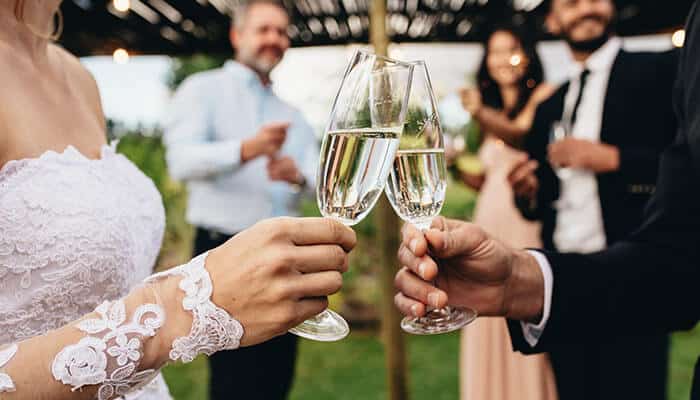
Sometimes it is the smallest touch that makes wedding wine feel meaningful.
You could include a short note on the menu about why a certain wine was chosen. You could serve a bottle from a favorite trip. You could choose a sparkling wine that reminds you of a celebration you shared before the wedding. You could pour a special red with dinner because it pairs with a family recipe.
These details do not need to be loud.
In fact, they are often better when they are subtle.
A small line on the menu can be enough. Something like, “We chose this wine because it reminds us of our first trip together.” Simple. Sweet. Personal.
You could also reserve a special bottle for a private moment after the ceremony. A few quiet minutes together before the reception begins can be one of the most meaningful parts of the day. A glass of something you both love can make that moment feel even more grounded.
Because weddings move fast.
One minute you are getting ready. Then you are walking down the aisle. Then people are cheering, hugging, taking photos, asking where the bar is, and pulling you onto the dance floor.
A small pause matters.
Do Not Overthink It
Here is the truth. Most guests will not remember the exact name of the wine.
They will remember how they felt.
They will remember whether dinner felt relaxed. Whether the toast felt joyful. Whether they had something nice in their glass while they laughed with people they love.
That does not mean the wine does not matter. It does. But it matters because of what it supports.
Connection. Warmth. Celebration. Ease.
So do not let wine become another source of pressure. You are not trying to prove your taste. You are not trying to impress every guest. You are choosing something to share.
That is what makes it meaningful.
Choose Wines That Feel Like You
At the end of the day, the best wedding wines are not always the rarest, most expensive, or most impressive. They are the wines that fit your day and feel true to you.
They work with the food. They match the mood. They make sense for the season. They welcome your guests. And maybe, in some small way, they carry a piece of your story.
That is enough.
Your wedding will be full of moments you cannot fully plan. A laugh during the vows. A parent wiping away tears. A friend giving a toast that is funnier than expected. The quiet clink of glasses before everyone takes that first sip.
Choose wines that help those moments feel easy, warm, and real.
Because every toast deserves more than a drink in a glass.
It deserves meaning.