

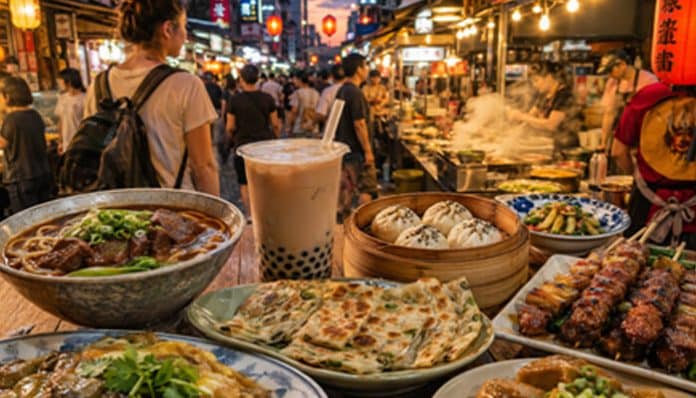

Taiwan does not get the taiwan food travel recognition it deserves. Japan absorbs most of the attention for Asian food tourism, and while that reputation is earned, Taiwan operates on a different frequency. The island is where beef noodle soup became an art form, where bubble tea was invented, where night markets transformed street eating into a cultural institution, and where Japanese, Chinese, and indigenous Taiwanese culinary traditions fused into something that exists nowhere else on earth. For American food travelers who have done Tokyo and Bangkok, Taiwan is the destination that consistently delivers the most surprise per meal.
Why Taiwan is a Food Traveler’s Dream
The economics of eating in Taiwan are extraordinary by any standard. A bowl of beef noodle soup that would cost $18 at a Taiwanese restaurant in LA costs $3 at the source. The scallion pancake that took 40 minutes to make at a weekend market in your city is produced fresh every five minutes at a street stall in Taipei for less than a dollar. A Michelin-recognized oyster omelette at Ningxia Night Market costs $2.
None of this means the food is simple. Taiwan’s culinary complexity comes from the convergence of Min-nan Chinese cooking from Fujian province, the Japanese influence from 50 years of colonial administration, the indigenous Austronesian food traditions of the island’s original inhabitants, and the wave of mainland Chinese cuisines that arrived with the Nationalist government in 1949. Beef noodle soup is Taiwanese because of a Sichuan military cook who adapted his recipe to local conditions. Bubble tea is Taiwanese because someone at a teahouse threw tapioca pearls into milk tea in the 1980s and watched what happened. The food culture here is alive in a way that rewards curiosity.
The Night Markets: Taiwan’s Essential Food Institution
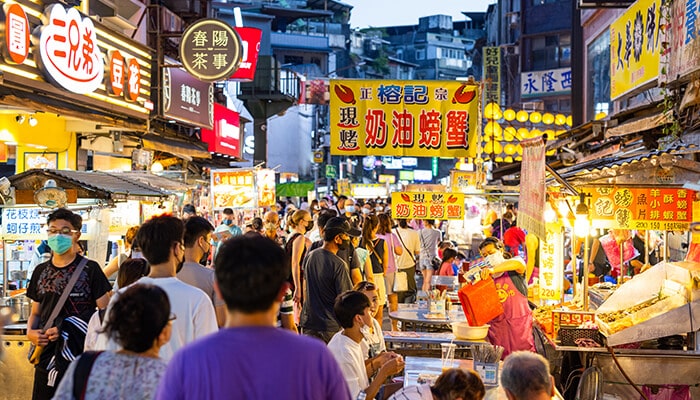
Taiwan’s night markets are not tourist attractions with food stalls. They are the primary social infrastructure of Taiwanese evenings: the place where families eat dinner, teenagers hang out, couples walk, and vendors develop decades-long relationships with regular customers. The best food is not always at the most famous market. It is at the stall where the vendor has been making the same dish for thirty years.
Raohe Night Market
Raohe Street Night Market in Songshan District is the first night market most American visitors attempt, and for good reason. The covered street market runs from 5pm to midnight daily, rated 4.3 from over 80,000 reviews. The entry point, where the Fuzhou Pepper Bun stall operates at 253 Raohe Street, is both the beginning of the evening and its first test.
The Fuzhou Pepper Buns are the dish that has been written about, filmed, and recommended thousands of times. The process is visible from the queue: raw dough wrapped around a filling of pork, scallion, and white pepper, then slapped against the inner wall of a clay oven and baked until the exterior is shatteringly crisp. The inside contains a pork broth that has no business fitting inside a bun that size. Rated 4.3 from 239 reviews, open daily from 2pm to 9:30pm. Arrive before 6pm on weekdays when there is no queue and quality is at its peak.
Beyond the pepper buns, Raohe rewards wandering. Grilled squid on bamboo skewers, sweet potato balls fried to order with purple sweet potato that is simultaneously chewy and airy, oyster vermicelli in a thick sweet potato starch gravy, and peanut ice cream rolls wrapped in spring roll skin with shaved peanut brittle that turns to powder are all consistently cited by food-focused visitors.
Ningxia Night Market
Ningxia Night Market in Datong District is where the serious food travelers go when they want fewer tourists and better eating. Rated 4.2 from 60,579 reviews, it opens at 5pm and closes at 11:30pm daily. The market is narrower and more densely packed than Raohe, which some reviewers cite as a disadvantage and others as evidence of its authenticity.
The Yuen Huan Pien oyster omelette stall is the market’s most notable vendor and has appeared in the Michelin Guide. The oyster omelette itself is a pan-fried combination of fresh oysters, sweet potato starch, egg, and scallion, served with a red sauce that is simultaneously sweet, savory, and faintly acidic. The line stretches hundreds of meters at peak hours. The adjacent clam soup is frequently ordered alongside as the broth cuts the richness of the omelette.
Sesame oil chicken appears on multiple stall menus throughout Ningxia and is the dish most associated with the market. The Taiwanese iteration uses rice wine and sesame oil in proportions that produce a fragrant, glossy broth that is warming in the cool months and inexplicably satisfying even in humidity.
Nanjichang Night Market
Nanjichang Night Market in Zhongzheng District is the local’s market that serious food travelers specifically seek out. Rated 4.3 from 34,374 reviews, open daily from 5pm to midnight, it is described by multiple reviewers as the closest approximation of what a real neighborhood night market feels like without tourist infrastructure. Stall numbers are posted on signs, more menus have English, and the prices are lower than at the more famous alternatives.
The duck blood and pork mala noodles here have become something of a cult item among food-focused visitors, with reviewers returning the next day specifically for another bowl. The sweet potato balls, the grilled corn with a marinade that one reviewer describes as tasting like barbecue chicken, and the fried fish are the other most cited items.
Tainan: Taiwan’s Food Capital
Tainan, the oldest city in Taiwan, is considered by Taiwanese people themselves to be the island’s food capital. The city was Taiwan’s seat of government for two centuries before Taipei, and its food reflects that history in dishes that Taipei has never quite replicated. The Tainan milkfish soup, the coffin bread, the shrimp rolls, the danzai noodles, and the oyster pancake all have their definitive versions here.
The Tainan Garden Night Market on Section 3 of Hai’an Road is one of the largest night markets in southern Taiwan, open Thursday through Sunday from 5pm to midnight, rated 4.3 from nearly 50,000 reviews. The market is organized with a logic that distinguishes it from Taipei’s markets: food, games, and shopping in distinct zones, which makes navigation easier for first-time visitors. Reviewers specifically praise the variety of local Tainan cuisine that differentiates it from the standardized offerings at more tourist-oriented markets.
The Dadong Night Market, open Monday, Tuesday, Friday from 6pm to 1am, is the local alternative in Tainan that food travelers consistently describe as the most authentic night market experience in Taiwan. Rated 4.3 from nearly 32,000 reviews. The rectangular layout makes orientation easy, the crowd is almost entirely local, and multiple reviewers cite it as the single best eating experience of their Taiwan trip.
The Dishes You Must Eat in Taiwan
Beef noodle soup is the dish that Taiwan claims most emphatically. The Sichuan-Taiwanese variant with its red braised beef shank, wide wheat noodles, and deeply colored spiced broth exists in hundreds of versions across the island, and the disagreement over which restaurant does it best is a genuine ongoing debate among Taiwanese food lovers.
Bubble tea, or pearl milk tea, was invented in Taiwan in the 1980s and has since conquered the planet, but the original versions in Taipei’s tea shops have a balance of sweetness, tea strength, and tapioca texture that commercial chains everywhere have never managed to replicate. Order at 30 to 50 percent sweetness on your first attempt.
Stinky tofu is the Taiwan dish that divides visitors most cleanly. The fermented tofu is deep-fried until the exterior is crisp while the interior becomes custardy, and the smell during frying is the entry price. The taste, once you commit, has almost nothing to do with the smell. It is a legitimate conversion experience for many American food travelers who approach it reluctantly.
Scallion pancakes, known as cong you bing, are the breakfast food that Taiwanese street vendors have elevated to something approaching perfection. Dough is rolled with scallions and sesame, folded, flattened, and cooked on a griddle until layered and crisp. Egg is often added directly to the griddle alongside. The result costs less than a dollar and takes four minutes to make in front of you.
Staying Connected While Eating Your Way Through Taiwan
Finding the stall without an English sign in a market you have never visited requires Google Maps, translation, and the ability to share what you are eating with people who were not on the trip. US carrier roaming in Taiwan runs $10 to $25 per day. Holafly travel eSIM in Taiwan covers unlimited data on local networks from the moment you land, activated from home before you board. Your US number stays active for calls and texts. Everything else, the maps, the translations, the photos, the spontaneous recommendations from locals you have just met, runs through the eSIM.
Taiwan Food FAQs
What is the best night market in Taipei for food? Raohe and Ningxia are the two strongest options for food quality. Raohe is more accessible and better known. Ningxia is smaller, less tourist-oriented, and has Michelin-recognized vendors. Nanjichang is the best choice for travelers who want the most local experience.
Is Taiwan food safe for Americans with dietary restrictions? Vegetarian options exist at all major night markets, most prominently sweet potato balls, mushroom dishes, and various tofu preparations. Gluten-free eating is more challenging given the prominence of wheat noodles and soy sauce. Allergies to seafood require care at oyster omelette and clam soup stalls.